Electronics are the most unforgiving cargo in international logistics. A laptop or smart device damaged in transit is rarely repaired at destination — it is returned, replaced, and frequently written off as a total loss. Every dead-on-arrival unit consumes the product margin, the return shipping, the replacement shipping, and — most expensively of all — the customer. For exporters of high-value goods, electronics shipping damage is not a minor cost line; it is a direct threat to profitability.
When Boyang Packaging met a mid-sized electronics exporter shipping globally, its electronics shipping damage rate was costing the company well into six figures every year. Within one quarter, a redesigned protective packaging system cut that damage by 38 percent. This case study documents exactly what was wrong, what we changed, and what the numbers looked like after the fix.
The client is a Shenzhen-based electronics exporter shipping laptops, smart devices, and accessories to distributors in Europe, North America, and the Middle East — roughly two thousand parcels per month, with an average declared value above two hundred dollars per unit. Before the engagement, their damage rate hovered between six and nine percent depending on the route, with the worst performance on the longest sea-freight legs to Europe. The cost of that damage compounded quickly. Each damaged unit triggered a dead-on-arrival claim, a full replacement shipment at the exporter's expense, and an RMA process that consumed warehouse labor. Damaged units also created customs clearance complications when re-export paperwork had to be generated for returned goods. Add rising customer churn from delayed replacements, and the true cost of the damage rate was roughly triple the face value of the broken products themselves.
Boyang Packaging began with a free packaging audit of the client's actual cartons, packing stations, and transit records. The audit — conducted by our packaging engineers over two weeks — identified three root causes. First, the cartons were systematically oversized, leaving up to forty percent empty space that allowed products to slide and collide. Second, the single-layer bubble wrap used for primary protection was too thin for the parcel weights involved; it bottomed out completely on impact, transferring shock directly to the device. Third, there was no edge or corner protection whatsoever, even though the audit's drop tests showed that sixty percent of damage occurred at carton corners and edges, twenty-five percent came from internal sliding, and fifteen percent from crushing under stacked parcels.
The solution was a custom protective packaging plan built around the audit data, with every material choice validated before rollout. The first change was right-size cartons: matching box dimensions to product dimensions eliminated most of the void fill and stopped internal sliding. The second change was a new cushioning core — air column bags, whose independently sealed inflatable chambers absorb impact and keep protecting the device even if a single column is punctured. The third change added honeycomb paper edge and corner protectors, giving the device boxes rigid defense at exactly the points where the drop tests showed damage occurring. Double-wall cartons were specified for the heaviest sea-freight routes. Before committing to production volumes, the new system was tested in Boyang's in-house lab: drop tests from 1.2 meters on every face and corner, vibration simulation for road and sea transit, and compression tests for stacked pallets. Two rounds of iteration refined the column count and film gauge before the design was finalized. The exporter's team was trained on the new packing method in a single session, and the system went live at the start of the following quarter.
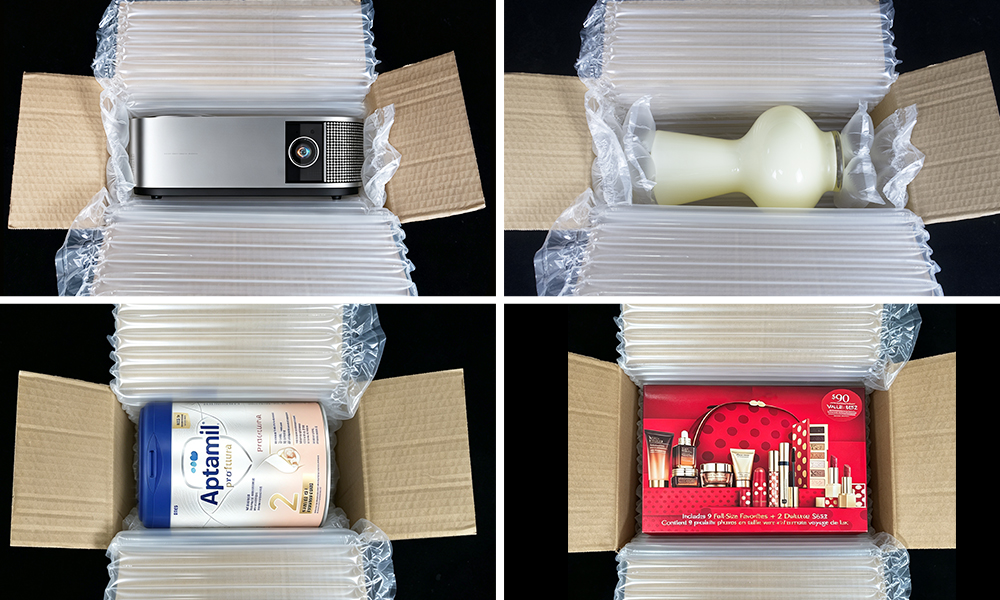
The results were measured over the first full quarter after rollout, using the same tracking methodology the exporter had used before. The headline number: the damage rate fell from approximately seven percent to 4.3 percent — a 38 percent reduction in electronics shipping damage on identical routes and volumes. That shipping damage reduction translated directly into cash saved across claims, replacements, and freight.
Metric | Before | After |
Damage rate | ~7.0% | ~4.3% |
Estimated claim cost / quarter | $18,400 | $11,300 |
Customer damage complaints / quarter | 41 | 19 |
Average parcel weight | 1.42 kg | 1.29 kg |
Claim costs fell by more than thirty-eight percent in absolute terms, and customer damage complaints dropped by fifty-two percent. Because the new system is lighter — air column bags weigh a fraction of the foam and paper they replaced — average parcel weight also fell by nine percent, producing additional freight savings on every single shipment. The exporter's purchasing director summed it up simply: the analysis paid for itself in the first month.
Your packaging may be costing you more than you think — and you will never know without measuring it. Share your product types, current shipping damage rate, and typical shipment volumes with our packaging engineers, and we will conduct a free audit of your current setup, complete with drop-test data and a written improvement plan. There is no commitment, no obligation, and no sales pressure — just an honest, quantified look at where your damage is coming from and how to stop it. Send your product details and damage numbers to our team today, and we will come back within five business days with your recommendations.