Every year, billions of dollars in products are damaged in transit — and the root cause is often not the carrier, but the packaging decision made weeks earlier. For e-commerce sellers, warehouse managers, and logistics teams, choosing between modern air column bags and traditional foam packaging is one of the most consequential purchasing decisions of the year. In 2026, with protective packaging costs rising, sustainability rules tightening, and shipping damage claims squeezing margins, the comparison is no longer just about cushioning performance. It is about total operating efficiency. This guide compares both technologies honestly, side by side, so you can choose based on your products, your warehouse, and your budget.
Inflatable air column cushions are a modern evolution of protective packaging. Each bag is built from multiple vertically sealed air chambers, typically using a high-strength PA/PE composite film that resists punctures and retains air for months. The bags ship flat and deflated — taking up almost no warehouse space — and are inflated on demand with a low-cost air pump or compressor. When inflated, the independent columns distribute impact forces across the product's entire surface, absorbing shock from drops, vibration, and stacking pressure during transport. The engineering advantage is simple: each sealed chamber acts as an independent suspension unit. If one column is punctured, the remaining chambers continue to protect the product. That is why inflatable column cushions perform exceptionally well on high-value fragile goods — electronics, wine bottles, glassware, and automotive components — and why they adapt to irregular shapes in seconds, from a laptop to a perfume bottle.
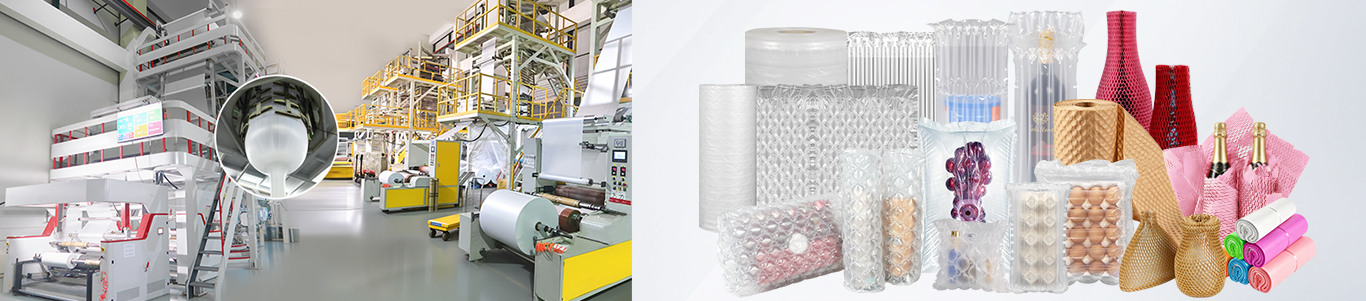
Traditional foam packaging — most commonly expanded polyethylene (EPE) foam — has protected shipments for decades, and for good reason. EPE foam is lightweight, chemically inert, moisture-resistant, and delivers excellent shock absorption across a wide temperature range. It is reusable, can be die-cut to exact product contours, and requires no inflation equipment. For heavy industrial parts, furniture, and long-term storage protection, EPE remains a genuinely excellent material. None of this means foam has no place in 2026 — it simply means the true cost comparison must include storage and labor, not just the unit price. The downsides of foam are operational rather than technical. Foam arrives pre-expanded, so it consumes enormous warehouse space — a pallet of foam cushions carries only a fraction of the product volume that the same pallet of flat-packed bags delivers. Labor costs are higher, because workers must physically place, arrange, and sometimes cut foam for each shipment. And with sustainability mandates tightening across the EU and US, single-use EPE that is difficult to recycle is becoming an EPR liability. None of this makes foam wrong — it simply makes foam expensive to operate at scale.
The most honest way to compare these two protective packaging technologies is factor by factor. The table below summarizes how they perform across the five criteria that matter most to a modern fulfillment operation: protection, storage space, cost, sustainability, and labor efficiency.
Factor | Air Column Bags | Traditional Foam (EPE) |
Protection | Sealed chambers absorb shock; survives single-column puncture | Consistent cushioning; ideal for heavy, dense items |
Storage Space | Ships flat — up to 90% less warehouse space | Pre-expanded — large storage footprint |
Cost | Lower material cost; air is free; no cutting labor | Higher volume cost; die-cutting adds expense |
Sustainability | Thin film, less plastic; recyclable options | Bulky waste; limited recycling; EPR risk |
Labor | Inflate in seconds with a pump | Manual placement and cutting; slower lines |
So when should you choose inflatable column cushions, and when does traditional foam still win? As a general rule, inflatable column cushioning is the better choice for e-commerce and cross-border shipping — operations where product sizes vary from order to order, warehouse space is at a premium, and labor cost per package hits the margin directly. It is especially strong for fragile, high-value items, where even a few percent of shipping damage can erase profitability. For sellers working with multiple SKUs and seasonal peaks, the ability to inflate cushioning on demand also means you never need to stock dozens of pre-sized foam inserts. The right answer ultimately depends on your package mix, your damage history, and your labor costs — which is why a data-driven test beats any generic recommendation. Traditional foam keeps its advantages in specific niches: very heavy parts that need rigid, structured cushioning; products requiring long-term storage protection; and applications where a die-cut insert doubles as presentation packaging. Many smart operations run a hybrid strategy — inflatable column cushions as the workhorse for standard parcels, EPE reserved for the heavy or premium segments. The key is to make the choice deliberately, based on your own damage data and cost per shipment, rather than defaulting to whatever the previous supplier provided.
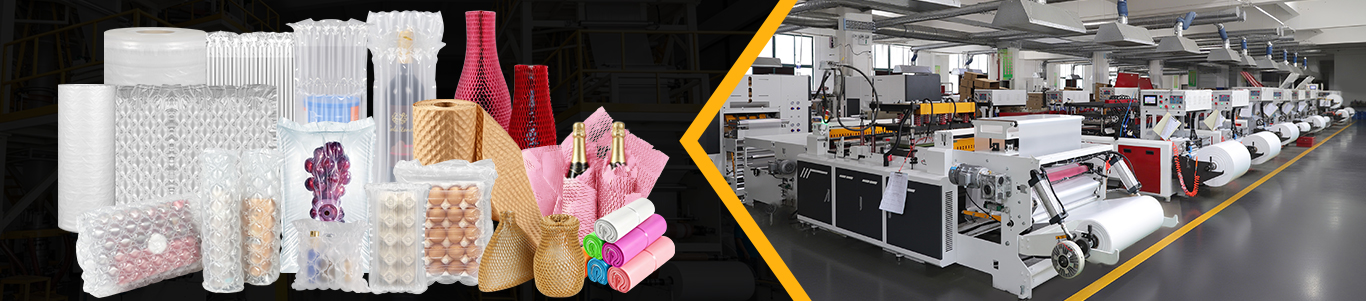
The fastest way to know which solution fits your operation is to test it yourself. Request air column bag samples and run your own drop tests — we will ship a sample kit in multiple sizes along with a quick-start inflation guide, so your team can verify protection levels, packing speed, void fill versatility, and storage savings with their own hands and their own products. If inflatable column cushions outperform your current packaging in your own tests, we will also provide a packaging cost comparison showing exactly what you would save on material and labor each month. Send us your request today — the samples are free, and so is the honesty.